OpenAI Just Walked Into My Lane
2026-05-16
This morning I thought Tesora was dead. OpenAI just bought Roi and launched ChatGPT Finances. But once the panic wore off, the real reading was very different.
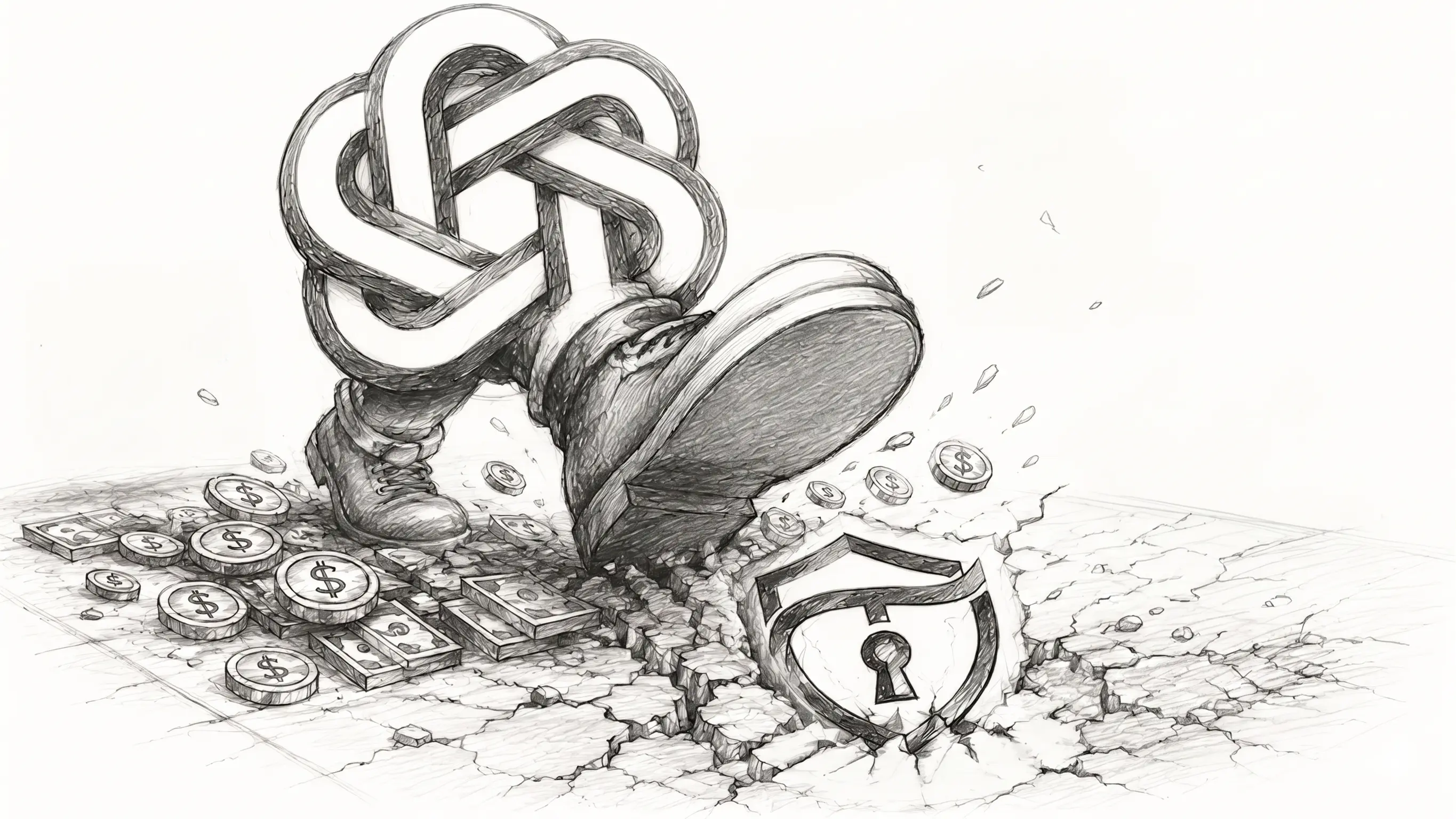


"My viral app is dead."
Or so I thought this morning.
OpenAI just acquired Roi. And on top of that, they launched ChatGPT Finances: a ChatGPT plugged into real bank accounts, net worth, transactions, and financial planning.
Basically, a chunk of what I'm building with Tesora.
The first reaction is obvious:
"Right. It's over."
Because when the most powerful AI company in the world walks into your lane, it's hard not to feel you're competing against something impossible.
But after thinking about it all day, I believe the real reading is different.
OpenAI doesn't want to build a bank
They want to become the horizontal layer through which you interact with everything: work, code, documents… and now money too.
And that changes the rules quite a bit.
Because if your product was just:
"a chat connected to financial data"
then yes, you're probably dead.
But if you build real workflows, local context, and a specific experience for a specific type of user… there's still room.
A lot of room, in fact.
The mistake would be selling yourself as "ChatGPT for finance"
This forces projects like Tesora to stop pitching themselves that way.
And start building things a generalist model can't solve well on its own:
- financial health scoring
- a marketplace of advisors
- real debt and planning workflows
- crypto and wallets
- a Spain/Europe focus
- integrated financial education
- specific automations
Each of these pieces, on its own, isn't interesting to OpenAI. Too vertical, too local, too specific.
But together, they form a product a generalist chat can't replicate without turning into something that's no longer a generalist chat.
The interesting part: OpenAI just validated the thesis
Without meaning to, OpenAI has confirmed what we'd been arguing for months:
- People do want to talk to an AI about their money.
- They do want to connect their accounts.
- They do want to understand their finances through a conversational interface.
Six months ago, this was a bet. Today it isn't.
Today it's a market validated by the biggest company in the space.
The challenge is no longer "having AI"
That's no longer a differentiator. It's the minimum table stakes.
The real challenge now is building something so useful, so specific, and so deeply integrated into the user's real life that a generalist product can't easily replace it.
And you don't get there with a wrapper over GPT. You get there with product, judgment, and focus.
Final thought
When I read the news this morning, I thought about closing the laptop.
Now, twelve hours later, I think the opposite.
Because when OpenAI walks into your vertical, it's not the signal that your idea is dead. It's the signal that your idea was right.
What dies isn't the problem. It's the lazy version of the solution.
And honestly, I think that's where the interesting part begins.
Which AI helped me write this article?
Yes, I use AI to help me create quality content. Can you guess which one?